Strengthening Cooperation Among Authoritarian Regimes: A Global Threat Analysis
The Economist reports on the increasing coordination between Russia, China, Iran, and North Korea, posing new challenges to global security.
 🏛️Politics
Photo: UNIAN
Key points
- Formation of an informal alliance between Russia, China, Iran, and North Korea
- Over 600 security cooperation cases recorded between 2019-2025
- High coordination despite the lack of a unified command structure
A New Geopolitical Reality
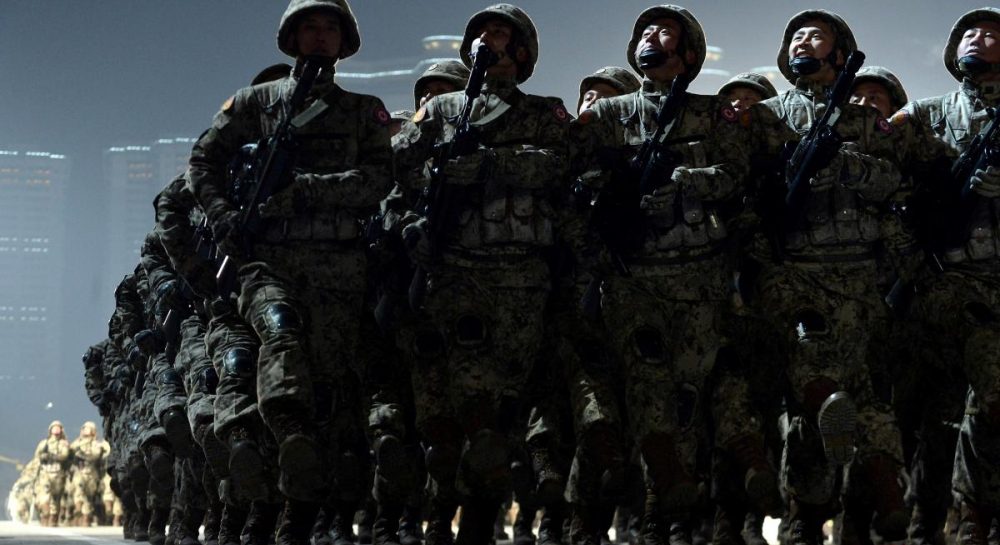
Analysts at The Economist point to the emergence of an informal yet increasingly coordinated alliance between Russia, China, Iran, and North Korea. Despite lacking a centralized structure similar to NATO, these nations are actively exchanging military technologies, intelligence, and combat experience, allowing them to circumvent international sanctions more effectively.
According to the FDD think tank, over 600 instances of security cooperation between these countries have been recorded since 2019. This interaction has intensified significantly following the full-scale Russian invasion of Ukraine, where partner resources assist Moscow in sustaining its war machine.
Limits of Cooperation and Challenges for the West
Despite shared interests, the authors highlight internal contradictions within this bloc. For instance, China's economic priorities regarding stability in the Middle East do not always align with Russia's push for global destabilization. However, even without formal mutual defense commitments, the mutual support provided by these regimes significantly complicates Western diplomatic and military efforts.
Source UNIAN — unian.ua/world/rosiya-knr-iran-ta-pivnichna-koreya-stvorili-neforma… ↗
Read next
 🎭Culture & Sport
Rose care in autumn: tips for gardeners in Horishni Plavni
Experts explain why it is better to delay heavy pruning of roses until the first hard frosts.
 🇺🇦Ukraine
Estonia supports Ukraine's right to self-defense following incident in the Gulf of Finland
Estonian Foreign Minister Margus Tsahkna stated that the strike on a Russian vessel is a consequence of Russia's war, emphasizing Ukraine's right to defend itself.
 🛡️Security
Rescue operation in Dymer: 89-year-old woman pulled from rubble of destroyed building
In the village of Dymer, Kyiv region, rescuers pulled a surviving elderly woman from the rubble after a Russian drone hit a residential building.
 🧠AI Analysis
Russia is testing NATO's defense algorithms through airspace violations, says Dmytro Kashchenko
Retired Ukrainian Colonel Dmytro Kashchenko claims Russia uses drone and missile incidents in NATO countries to test the Alliance's reaction.
 💡Tech
Scientists revive 40,000-year-old bacteria from permafrost: climate risks
Researchers from the University of Colorado found that ancient microorganisms can rapidly multiply after thawing, posing a threat of greenhouse gas emissions.
 🎭Culture & Sport
Unique harvest: 350-kilogram pumpkin grown in Cherkasy region
A resident of Smila, Oleksiy Buryachenko, has grown a giant pumpkin that became the largest in Ukraine, though it was not officially registered as a record.