Systematic Strikes on Russian Oil Infrastructure: Impact on Energy Logistics
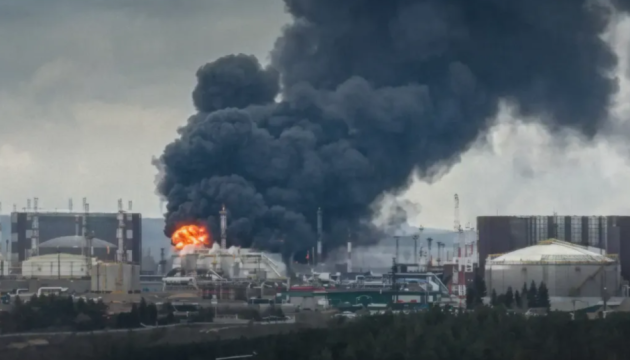
Ukrainian Defense Forces targeted eight Russian oil facilities in a single week, disrupting fuel production and strategic supply chains across several regions.
 💼Economy
Photo: Ukrinform
Key points
- Eight Russian oil infrastructure facilities were struck within one week.
- Operations reached deep-rear facilities in Bashkortostan and Tatarstan.
- Strategic nodes of the Druzhba pipeline and the Kerch Bridge were damaged.
Over the past week, Ukraine's Defense Forces conducted a series of large-scale operations aimed at destabilizing Russian military logistics and the energy sector. According to the Ministry of Defense of Ukraine, eight oil infrastructure facilities were targeted. These facilities supply fuel not only to the occupying forces but also to significant industrial regions of the aggressor state. The operations were comprehensive, ranging from attacks on production capacities to the destruction of distribution and storage hubs.
Geography and Scale of the Strikes
The most significant strikes occurred in the Krasnodar Krai and Rostov regions. Specifically, the Ilsky Oil Refinery, with an annual capacity of approximately 6.6 million tonnes, faced repeated attacks. Primary oil processing units AT-4, AT-5, and AT-6 were damaged, along with the gasoline production complex. Additionally, in the city of Azov, fires broke out at four industrial sites, including the Flash Energy, Transit-Express, and Azovskaya oil depots.
The geography of these operations extended far beyond border regions. Ukrainian drones reached facilities in Bashkortostan and Tatarstan, located over 1,500 kilometers from the border. In Salavat, the Gazprom Neftekhim Salavat complex, one of Russia's largest processing facilities, was hit. The Bashneft-Ufaneftekhim refinery and the Kaleykino oil pumping station in Tatarstan—a critical hub for the Druzhba pipeline system—were also targeted.
Logistical Collapse and Infrastructure Losses
In addition to energy facilities, the Defense Forces maintained pressure on transport arteries. Repeated attacks on the Kerch Bridge resulted in temporary traffic suspensions and structural damage, including a reported road arch collapse. This significantly complicates the delivery of fuel and military equipment to occupied Crimea and the southern front.
Experts note that the systematic nature of these strikes indicates a strategy of exhausting the enemy's energy resources. The confirmed hits on three 50,000-cubic-meter storage tanks at the Kaleykino-1 station demonstrate Ukraine's capability to strike not just refineries but also key storage nodes, creating a domino effect across the entire supply chain.
Source Ukrinform — ukrinform.net/rubric-ato/4187363-ukraines-defence-forces-strike-eig… ↗
Read next
 🧠AI Analysis
US Director of National Intelligence: Putin is not a friend to America
DNI Jay Clayton clarified that diplomatic rhetoric does not negate the hostile stance of the US regarding Russia's actions in Ukraine.
 🛡️Security
Consequences of the attack on the Kyiv region: death toll in Dymer rises to eight
Rescue services continue clearing rubble in Dymer following an enemy strike, where eight bodies have now been recovered.
 👥Society
Clashes at Kyiv Pechersk Lavra: Police Launch Investigation
Clashes between groups occurred at the Kyiv Pechersk Lavra, prompting police intervention and an official investigation.
 🎭Culture & Sport
Numerological forecasts: does your birth date influence success?
We analyze popular esoteric theories regarding the link between birth dates and personal ambition.
 👥Society
Civilian Evacuation: ISW Assesses Proposals for Humanitarian Corridors
Analysts from the Institute for the Study of War have analyzed the differences between Ukrainian and Russian initiatives regarding civilian evacuations from combat zones.
 🛡️Security
Another attack on the Novoshakhtinsk oil refinery in Russia
On the night of November 23, the Novoshakhtinsk oil refinery in Russia was hit, marking yet another strike on this key military supply facility.