Arctic Breakthrough: Norway Expands Northern Energy Production Near Russian Border
Amid Middle East instability and Europe's push to diversify energy supplies, Norway is actively expanding oil and gas production in the Arctic. Despite geopolitical risks and proximity to the Russian border, Oslo is investing billions in new deposits and strengthening regional defense.
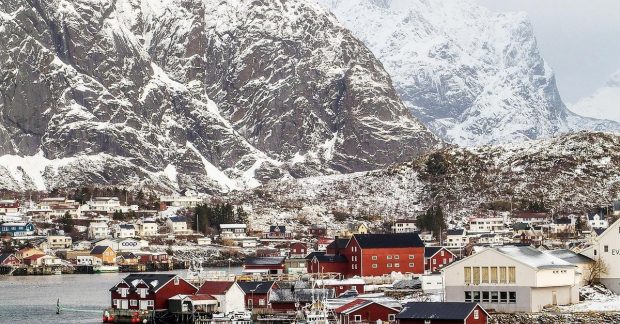 🏙️City
Photo: UNIAN
Key points
- Norway is boosting oil and gas production in the Arctic due to Middle East supply issues.
- The town of Hammerfest has become a key hub for European energy resource exploration.
- Equinor is investing billions of dollars into Barents Sea development projects.
- Oslo is strengthening its military presence in the north in response to Russian security threats.
Europe's energy security increasingly depends on strategic decisions made in the far north of the continent. Due to instability in the Persian Gulf region and ongoing supply disruptions, European countries continue to seek reliable alternatives to traditional fuel sources. At the center of this process is the small Norwegian town of Hammerfest, located above the Arctic Circle, which has transformed into the primary onshore base for exploration and resource extraction in the Barents Sea.
Arctic Production and Equinor Investments
On the outskirts of Hammerfest operates Europe's only liquefied natural gas plant, receiving raw materials via pipeline from the offshore Snøhvit field. State energy company Equinor directs billions of dollars to support and expand production on the Norwegian continental shelf, with a significant portion allocated specifically to northern projects. According to official reports, the northern part of the Barents Sea is currently characterized as the region with the highest probability of major new oil and gas discoveries.
Security Challenges and Regional Militarization
The expansion of industrial activity is accompanied by rising tensions and a stronger military presence. Norway views its Russian neighbor as the primary threat to national security, prompting the deployment of new units and the reinforcement of defense capabilities near the border. Meanwhile, Moscow closely monitors Oslo's Arctic initiatives, with regular Russian fighter jet flights near offshore extraction facilities and cyberattacks targeting energy infrastructure, highlighting the region's vulnerability to global geopolitical conflicts.
Source UNIAN — unian.ua/economics/energetics/vidobutok-gazu-v-yevropi-norvegiya-ro… ↗
Read next
 🚨Events
Quality of Reforms: Why Ukraine's EU Integration Changes Stumble on Implementation
The European Commission released a report on Ukraine's integration, noting that previous recommendations remain partially fulfilled. Experts point out that poor decision …
 🚨Events
Exchange Rates in Banks and Exchangers: Situation on November 23
As of Monday, November 23, Ukrainian banks recorded a decrease in the average exchange rates of foreign currencies, while non-banking exchange offices showed a slight inc…
 🛡️Security
Jet-Powered Geran-5: Aviation Expert Explains Threats Posed by New Drone Modification
Russian forces have begun using new modifications of strike UAVs equipped with jet engines, significantly surpassing standard Shaheds in speed and destructive power.
 🚨Events
Meteorologists Release Weather Forecast for December 2026: What to Expect as Winter Begins
December 2026 in Ukraine is expected to be milder than the climate norm, with above-zero temperatures prevailing. However, short cold spells and mixed precipitation of ra…
 🛡️Security
Aftermath of the Russian strike on Dymer: fate of residents and aid for victims
Following a devastating drone attack on Dymer, Kyiv region, authorities have provided temporary housing for the affected residents and initiated an assessment of the dama…
 🚨Events
Rare Eurasian pygmy owl spotted in the Chernobyl Reserve
Researchers at the Chernobyl Reserve have documented the presence of the Eurasian pygmy owl, the smallest owl species in Ukraine.